
Hungry Ghost Festival 2026 in Malaysia: Dates, Taboos & Street Food You Should Know
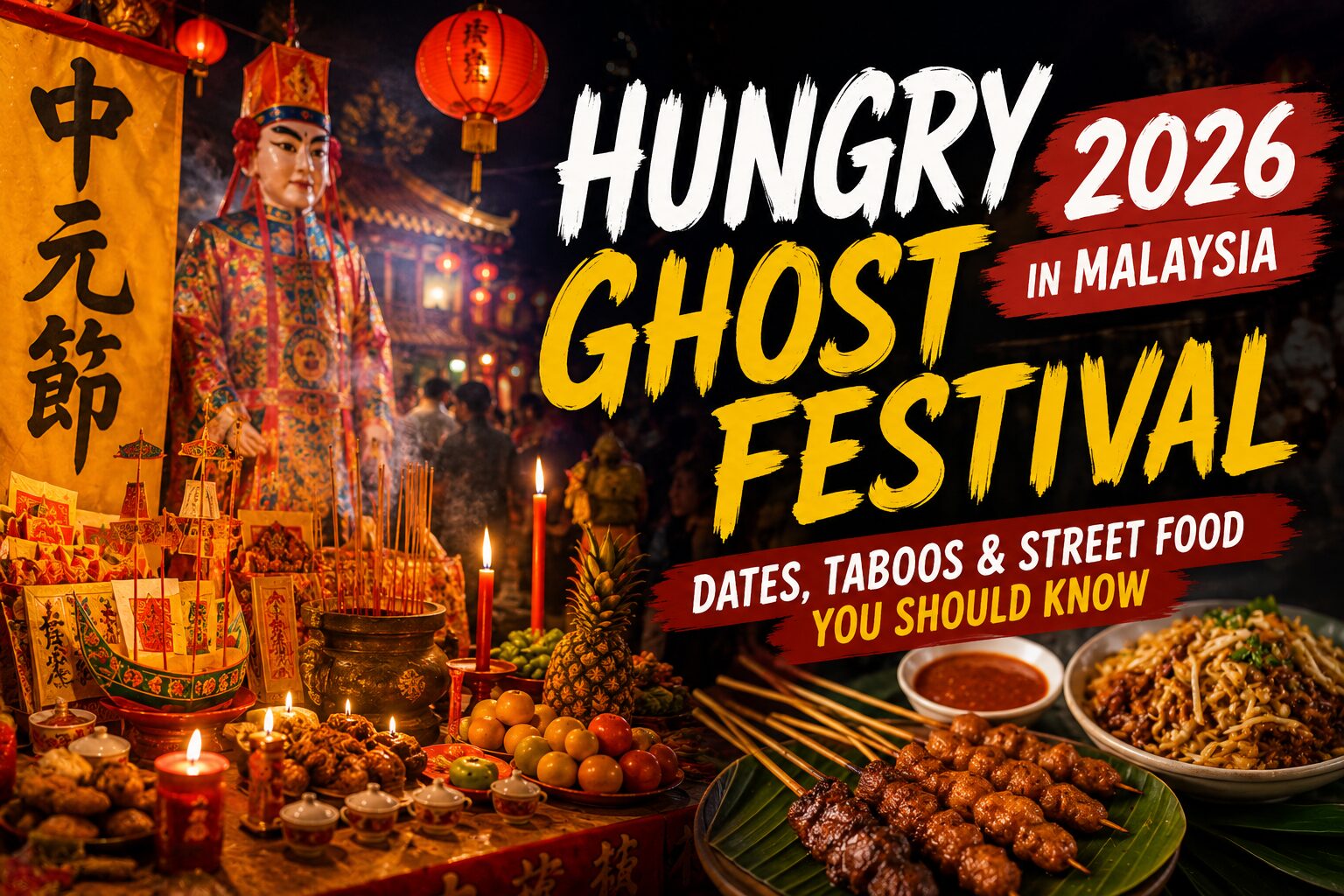
The Hungry Ghost Festival 2026 — the 15th day of the seventh lunar month — falls on 27 August, and Ghost Month runs from 13 August to 10 September. During this period in Malaysia, you’ll see food offerings laid out on roadsides, paper money and effigies being burned, and lively getai stage shows at night. It is a Chinese cultural observance honouring ancestors and wandering spirits, and knowing the basics helps visitors avoid confusion and show respect. This guide explains what the festival is, the 2026 dates, the customs you’ll see on the street, the taboos to keep in mind, and the street food to enjoy during the season.
Klook.comWhat is the Hungry Ghost Festival, and when is it in 2026?
The Hungry Ghost Festival is a Chinese observance held in the seventh lunar month to honour ancestors and wandering, “unattended” spirits; in 2026 Ghost Month begins on 13 August, runs until 10 September, and the main festival day (15th day) is 27 August.
| Timing | 2026 date |
|---|---|
| Start of Ghost Month (“gates of hell” open) | 13 August |
| Hungry Ghost Festival (15th day — peak) | 27 August |
| End of Ghost Month (gates close) | 10 September |
The festival traces back to the Buddhist Ullambana (Zhongyuan) tradition. The seventh lunar month is known as “Ghost Month,” when the gates of the underworld are believed to open and spirits return to the world of the living. Spirits with no descendants are said to wander hungry, so people lay out food and other offerings to appease them. In Malaysia it is most visible in Chinese-majority areas such as Penang, Kuala Lumpur and Ipoh. Note that some communities mark the 14th day (26 August in 2026) rather than the 15th as their main day.
Why are offerings left on the roadside and paper burned?
Roadside offerings and the burning of paper money (“hell notes”) and paper effigies are a way to “deliver” food, money and goods to ancestors and wandering spirits, to ward off misfortune and pray for peace.
Offerings typically include fruit, sweets, rice, candles and incense. Burning paper money and paper models of houses, cars and clothing is believed to send these goods to the afterlife through the smoke. You’ll see this on sidewalks, in front of shops and around temples, from daytime into the evening. If you come across it while travelling, there’s no need to be alarmed — simply pass by quietly or watch respectfully.
What are the getai stage shows you see at night?
Getai are open-air live stage shows held during Ghost Month to entertain the spirits, featuring song performances and Chinese opera (wayang).
You may notice that the front row of seats is left empty — it is reserved as a “VVIP” section for the spirits, and the living do not sit there. The shows are organised by local temples and community associations, filling the night with lively music. Visitors are welcome to watch from the back, but should avoid sitting in the front row and refrain from touching offerings or stage items.
What should visitors avoid doing? (Taboos)
The main Ghost Month taboos are about avoiding disrespect to the spirits: don’t stay out too late, don’t pick up money on the ground, and don’t step on offerings.
- Avoid being out late at night, and avoid swimming or camping near water during this period.
- Don’t pick up money found on the ground (it’s considered to belong to the spirits).
- Don’t step on or over roadside offerings and incense.
- If someone calls your name or taps your shoulder at night, don’t turn around immediately.
- Avoid shouting, whistling, or being noisy at night.
- Don’t leave laundry (especially white garments) hanging outside overnight; some also avoid wearing black or red.
These are folk beliefs rooted in Chinese communities rather than scientific facts, and whether to follow them is a personal choice. Still, visitors do well to follow local custom — and to photograph offerings and rituals quietly and respectfully.
What street food can you enjoy during the season?
During the festival, hawker stalls and night markets (pasar malam) pop up around temples and getai stages, making it a great time to sample local Chinese street food.
Food used in offerings is often shared and eaten by the family afterwards, and Chinese neighbourhoods become especially lively during this period. Local favourites to look for include bak kut teh (pork-rib herbal soup), char kway teow, Hokkien mee, yong tau foo and dim sum. If you visit George Town in Penang or KL’s Chinatown, pair the street food with a look at the festival’s traditions.
Frequently asked questions (FAQ)
When is the Hungry Ghost Festival in 2026?
It falls on 27 August 2026 (the 15th day of the seventh lunar month). Ghost Month runs from 13 August to 10 September.
Is the Hungry Ghost Festival a public holiday in Malaysia?
No. It is a cultural and religious observance, not a public holiday, so shops and transport operate as normal.
Can visitors watch the getai shows?
Yes — from the back. Don’t sit in the empty front row (reserved for spirits), and don’t touch the offerings.
Should I avoid travelling during Ghost Month?
There’s no need to. Most people simply observe a few customs, such as avoiding night-time water activities. Chinese neighbourhoods are in fact especially lively.
Is it OK to photograph the offerings?
Generally yes, but be respectful and quiet around altars and people performing rituals. If unsure, observe the surroundings first.
Is there special food eaten during the season?
There isn’t one set dish; fruit and sweets are offered and later shared by the family. At hawker stalls you can enjoy Chinese favourites like bak kut teh and Hokkien mee.
Summary
The Hungry Ghost Festival 2026 falls on 27 August, with Ghost Month running 13 August–10 September. The roadside offerings, burning paper and night-time getai are all ways of honouring ancestors and spirits. With a little respect — not sitting in the front row, not stepping on offerings — visitors can comfortably enjoy both the culture and the street food.