
The Complete Guide to Malaysian Durian|Season, Varieties, and Where to Try It
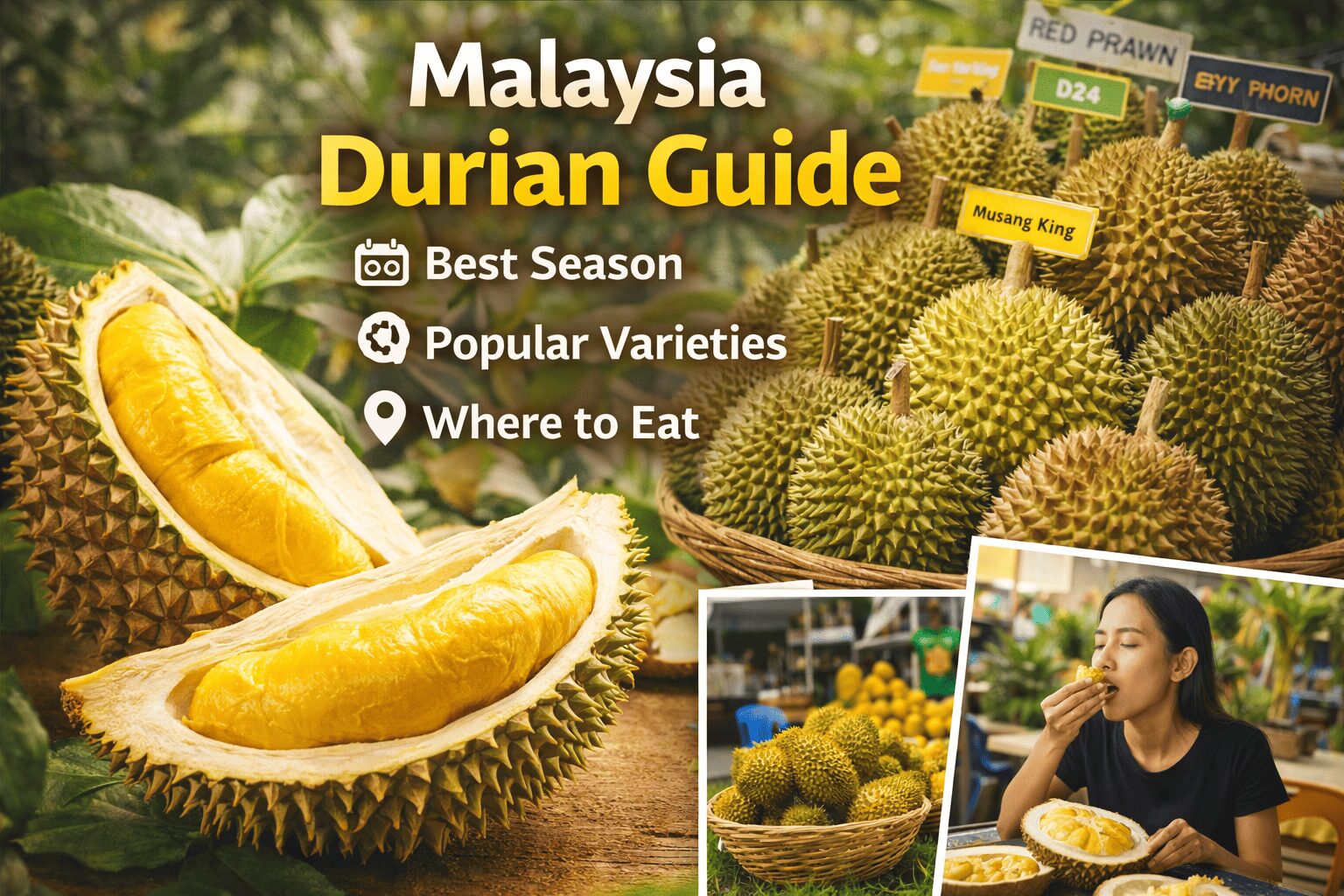
Known as the “king of fruits,” durian inspires equal parts devotion and controversy. Its pungent aroma is famously polarizing, but those who love it swear by its rich, custard-like flesh. Among the world’s durian producers, Malaysia stands apart: its tree-ripened fruit is considered the gold standard by enthusiasts everywhere. This guide covers the basics, the seasonal calendar, the top varieties to look for, and the best places in Kuala Lumpur and Penang to try Malaysia’s most legendary fruit.
1. Durian Basics — and Why Malaysian Durian Is Special
Durian is a large tropical fruit native to Southeast Asia, weighing 1–3 kg and armored with hard spikes. Inside, the yellow-to-orange flesh has a creamy, custard-like texture and a famously complex aroma — imagine vanilla, almonds, onions, and aged cheese in the same bite.
What sets Malaysian durian apart is how it’s harvested. Thai producers typically cut fruits from the tree while still firm. Malaysian farmers let durians fully ripen on the tree and only collect what falls naturally to the ground. The result is higher sugar content, bolder aromas, and a far more intense flavor — the kind of durian connoisseurs travel across continents to try.
2. When Durian Season Happens
Malaysia has two durian seasons: a main season from May to August and a minor season from November to February. June and July are peak months, when markets overflow with varieties and prices stabilize.
Regional timing varies. Penang and Pahang peak from June to August, while Johor starts a little earlier in May. Traveling in early May? You’ll catch the first fruits of the season — a prized and relatively rare opportunity. Visit in July for maximum choice.
3. Five Must-Try Varieties
Musang King (D197) — the most celebrated of all. Buttery, slightly bitter, deeply aromatic, and the priciest option, often exported to China and Japan.
Black Thorn (D200) — a rising star with vibrant orange flesh and an almost melt-in-the-mouth sweetness. Currently the most expensive variety after Musang King.
D24 (Sultan) — a classic with a slightly bitter finish, beloved by Malaysians for decades and very reasonably priced.
Red Prawn (Udang Merah) — a Penang specialty with reddish-tinged, juicy flesh. Sweet and approachable — a great starting point for first-timers.
XO — a fermented, almost alcoholic flavor profile. Adventurous eaters only.
4. Where to Eat Durian in KL and Penang
In Kuala Lumpur, head to SS2 Durian Street (around Jalan SS2/24), a bustling evening stretch lined with durian stalls. Top 10 Durian SS2 lets you buy by weight and variety — great for sampling. For a premium experience, reserve a tasting flight at specialty shops like Durian Kaki.
In Penang, the Balik Pulau district is home to durian orchards that offer all-you-can-eat tours during peak season. Or pull up a plastic stool on George Town’s informal “Durian Street” to try several varieties side by side with locals.
Conclusion
Malaysian durian is the kind of food experience worth planning a trip around. With seasons shifting from May through August, the varieties you’ll encounter change week to week. Newcomers should start with Red Prawn or Black Thorn before graduating to Musang King — and, if you’re brave enough, XO. Tree-ripened durian in Malaysia is a flavor you genuinely can’t find anywhere else. Make sure it’s on your list.
Klook.com