
Malaysia’s National Dishes: What to Eat on National Day — Beyond Nasi Lemak
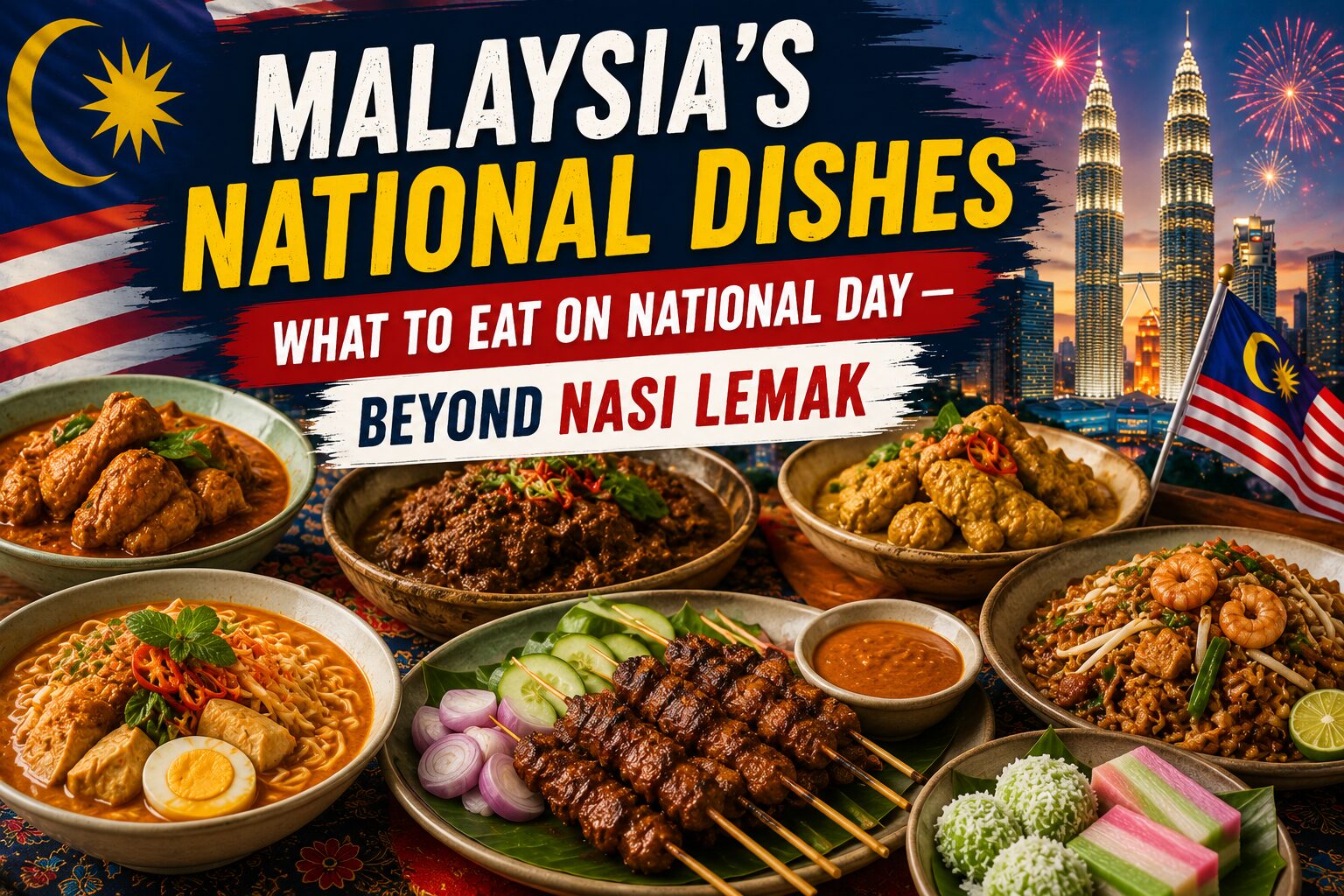
Malaysia’s national dish is nasi lemak — coconut-cooked rice served with sambal. National Day (Merdeka Day) on 31 August celebrates a nation built together by many communities, and the table reflects it, with dishes that blend Malay, Chinese and Indian influences. This guide introduces the iconic national dishes to try on National Day, along with their origins and how to eat them. That very diversity of food is what makes Malaysia special.
Klook.comWhat is Malaysia’s national dish? (Nasi lemak)
Malaysia’s national dish is nasi lemak — rice cooked in coconut milk, served with sambal, fried anchovies (ikan bilis), peanuts, boiled egg and cucumber.
Once mainly a breakfast dish, it’s now eaten all day. A popular version, nasi lemak ayam, adds fried chicken (ayam goreng). From banana-leaf-wrapped street versions to elaborate restaurant plates, it’s affordable and utterly iconic of Malaysia.
Multicultural flavours ①: Malay dishes (satay & rendang)
The Malay icons are satay (grilled meat skewers) and rendang (a spiced slow-cooked stew), both essential at festivals and holidays.
Satay is served with a sweet-savoury peanut sauce. Rendang simmers beef (or other meat) in coconut milk and spices into a rich, deeply flavoured dish that’s a staple at celebrations. Both are halal and central to Malay home cooking.
Multicultural flavours ②: Chinese dishes (Hokkien mee & bak kut teh)
Among Chinese dishes, the icons are the dark-soy-fried Hokkien mee, the herbal soup bak kut teh, and char kway teow.
The noodle and soup culture brought by the Chinese community is integral to Malaysian food. Bak kut teh simmers pork in a herbal broth for a nourishing bowl, while Penang’s tangy assam laksa is widely loved too.
Multicultural flavours ③: Indian dishes (roti canai & nasi kandar)
Among Indian dishes, the staples are the soft, flaky roti canai and nasi kandar (rice with an assortment of curries poured over).
Roti canai is a flatbread eaten with curry or dal, a breakfast favourite. The Mamak (Indian-Muslim) eateries that serve them are open from morning to late night and handy for travellers. The sweet pulled milk tea, teh tarik, is a national drink.
What are Malaysia’s signature desserts and drinks?
For dessert, cendol (shaved ice with coconut milk and gula Melaka palm sugar) and ais kacang (ABC) are national favourites, and teh tarik is the classic drink.
These cold, sweet treats suit the hot climate perfectly — an after-meal or mid-stroll staple. Cendol, with its green jelly noodles and palm sugar, is easy to enjoy at stalls.
Where can you eat these national dishes on National Day?
On National Day, malls, restaurants and stalls operate as usual, so you can easily enjoy these dishes at local restaurants, food courts and hawker stalls.
For nasi lemak, the famous Village Park is a go-to; for street food, Jalan Alor (we cover KL’s popular spots in a separate article). Public holidays draw family crowds, so aim for earlier times at popular places.
Frequently asked questions (FAQ)
What is Malaysia’s national dish?
Nasi lemak — coconut rice with sambal, fried anchovies, peanuts and egg.
Is there a special dish for National Day?
There isn’t one set dish; multicultural icons like nasi lemak, satay and rendang all appear on the table.
Are there vegetarian or halal options?
Mamak and Malay eateries are generally halal, and there are many Indian vegetarian restaurants.
What is roti canai?
An Indian-origin flatbread eaten with curry or dal — a breakfast staple.
What is teh tarik?
A sweet milk tea “pulled” between vessels to create froth — a national drink.
Are shops open on National Day?
Malls, restaurants and stalls operate as usual, though banks and government offices close.
Summary
Malaysia’s national dish is nasi lemak, but the real charm is the diversity of food — Malay, Chinese and Indian flavours coexisting in one country. On National Day, taste satay, rendang, Hokkien mee, roti canai and teh tarik, and reflect on the multicultural journey they represent.