
Kuala Lumpur Travel Guide|Top Attractions and How to Plan Your First Visit (2026)
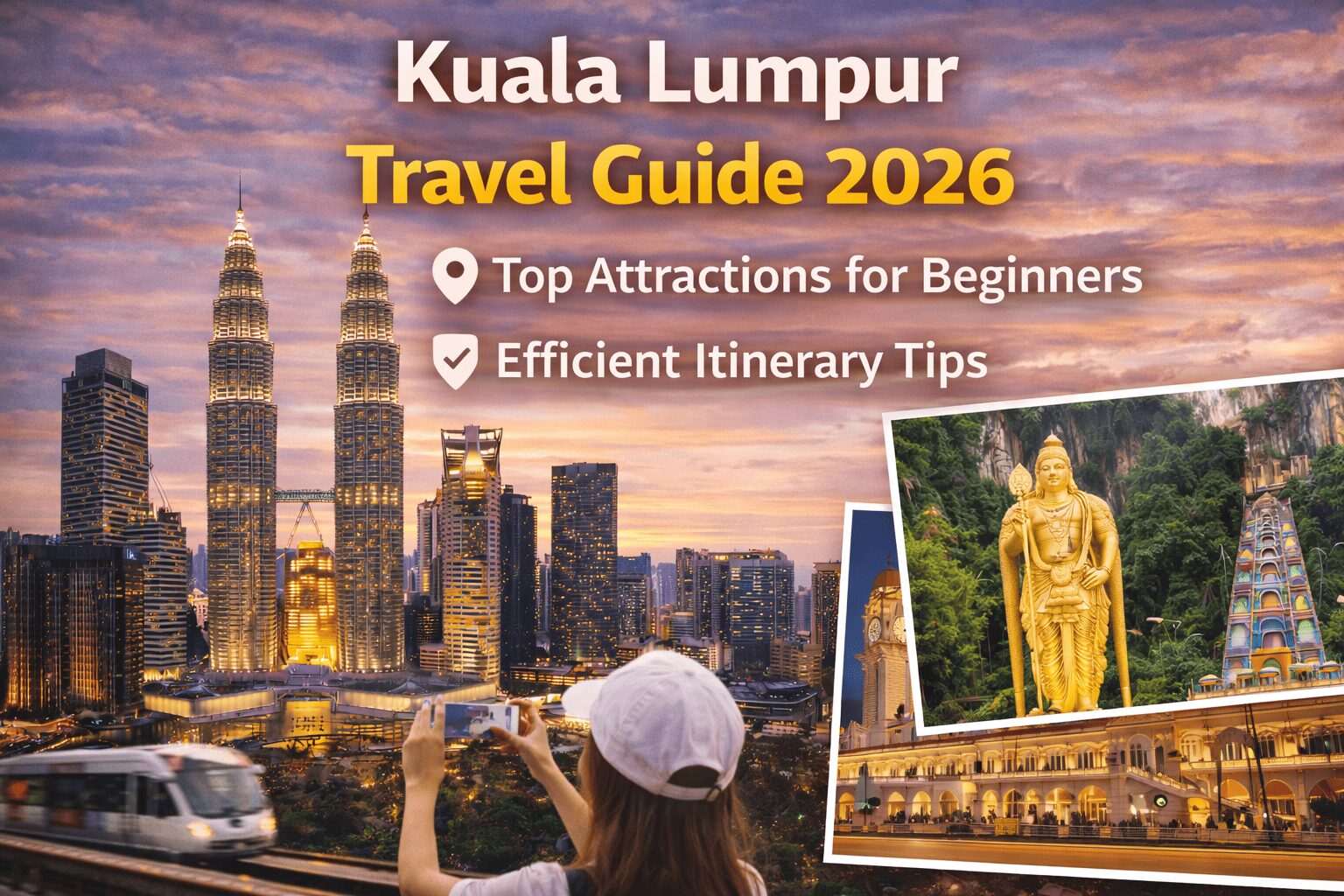
Kuala Lumpur, Malaysia’s dynamic capital, is a city where futuristic skyscrapers stand beside colonial landmarks, and where Malay, Chinese, and Indian cultures blend into one of Asia’s most fascinating urban tapestries. If it’s your first visit, the sheer range of options can feel overwhelming: which neighborhood first? How many days do I need? This 2026 guide breaks down the must-see sights, walks you through the city’s main districts, suggests 1-to-3-day itineraries, and covers getting around — everything a first-time traveler needs to make the most of KL.
1. KL Basics and Neighborhoods at a Glance
Malaysia uses the Ringgit (RM) — around RM4.5 to the US dollar as of April 2026. English is widely spoken, making KL one of Southeast Asia’s easiest cities for international travelers.
The city roughly splits into four tourist zones. KLCC is the modern core, anchored by the Petronas Twin Towers. Bukit Bintang is the shopping-and-nightlife heart, packed with malls, street-food lanes, and rooftop bars. Chinatown and Chow Kit preserve the gritty, old-KL feel with hawker stalls and wet markets. Merdeka Square and the Lake Gardens showcase colonial architecture, mosques, and museums. Mixing these zones is what makes a KL trip memorable.
2. Seven Must-See Attractions
- Petronas Twin Towers — the 452m-tall icon of KL, best viewed after dark during the KLCC fountain show.
- Batu Caves — 272 rainbow-colored steps lead to a dramatic Hindu cave shrine, just 30 minutes by train from downtown.
- Merdeka 118 — opened in 2024 and currently the world’s second-tallest building, with a spectacular observation deck.
- Petaling Street (Chinatown) — street food, trinkets, and late-night energy.
- Masjid Jamek — one of KL’s oldest mosques, sitting at the city’s historic birthplace.
- KL Tower — a forest-ringed telecoms tower offering 360° panoramas.
- Bukit Bintang — the district itself is a sight: luxury malls like Pavilion sit steps from Jalan Alor’s sizzling hawker stalls.
3. Sample Itineraries: 1, 2, and 3 Days
One Day: Morning at Batu Caves, afternoon at Merdeka Square and the National Mosque, sunset and dinner at KLCC Park with the Petronas fountain show.
Two Days: Day 1 as above. Day 2: KL Tower, Bukit Bintang shopping, dinner at Jalan Alor, then a slower, photo-friendly return to Batu Caves if desired.
Three Days: Add a day trip to Melaka (2 hours by bus and a UNESCO city) or an escape to Genting Highlands (a cool-weather resort with casinos and a theme park).
4. Getting Around Like a Local
The MRT, LRT, and monorail cover most tourist areas, with fares starting around RM1.20. Pick up a Touch ‘n Go card at any station — it works on trains, buses, and even toll roads.
For shorter trips and any journey between 5pm and 7pm weekday rush hour, Grab (Southeast Asia’s ride-hailing app) is your best friend: fares are transparent, and you don’t need to speak the language. Walking is pleasant in parks, but midday sun and traffic make longer on-foot routes less appealing.
Conclusion
Kuala Lumpur rewards visitors who plan just a little ahead. Give yourself two to three days, base your itinerary around KLCC, Batu Caves, and Bukit Bintang, and you’ll experience the city’s most striking contrasts — futuristic, historic, spiritual, and deliciously chaotic all at once. Download Grab, grab a Touch ‘n Go card, and get ready to fall for KL.
Klook.com